


Demoxytocin (0.10mg/capsule), 30 Capsules
Original price was: $149.95.$129.30Current price is: $129.30.
Demoxytocin Peptide is a synthetic, heterodetic cyclic peptide and a potent analog of Oxytocin. Characterized by the removal of the N-terminal amino group from the cysteine residue at position 1, this modification grants the molecule superior resistance to enzymatic degradation. It is primarily investigated for its oxytocic properties, enhanced half-life, and interaction with G-protein coupled receptors in smooth muscle models.
Demoxytocin Peptide is a favorite in comparative endocrinology and pharmacology studies because it acts as a more “robust” version of native oxytocin.
Key Areas of Laboratory Investigation:
-
Enzymatic Resilience: The defining characteristic of Demoxytocin peptide is its lack of a free amino group at the N-terminus. Laboratory research focuses on how this structural change prevents cleavage by aminopeptidases, resulting in a significantly longer biological half-life compared to native oxytocin.
-
Calcium Signaling & Smooth Muscle: Like its natural counterpart, Demoxytocin acts as a selective Oxytocin Receptor (OTR) agonist. In experimental models, it is studied for its ability to increase cell membrane permeability to calcium ions ($Ca^{2+}$), facilitating the phosphorylation of myosin light chains and inducing smooth muscle contraction.
-
Uterine & Mammary Research: Studies utilize Demoxytocin to observe labor induction dynamics and myoepithelial cell contraction in mammary gland models. Due to its potency, it is often used to establish dose-response curves for uterine hypertonicity.
-
Neurological & Social Behavior Models: Beyond peripheral tissues, researchers examine Demoxytocin’s potential in the Central Nervous System (CNS) to study social bonding, anxiety modulation, and the “anti-nociceptive” (pain-relieving) effects of OTR signaling.
Chemical & Technical Specifications
| Property | Specification |
| Common Names | Desaminooxytocin, Deaminooxytocin, ODA-914 |
| Sequence | Mpa-Tyr-Ile-Gln-Asn-Cys-Pro-Leu-Gly-NH2 |
| Molecular Formula | $C_{43}H_{65}N_{11}O_{12}S_{2}$ |
| Molecular Weight | 992.18 g/mol |
| Purity | ≥98% (HPLC Verified) |
| CAS Number | 113-78-0 |
| Form | Lyophilized Powde |


Related products
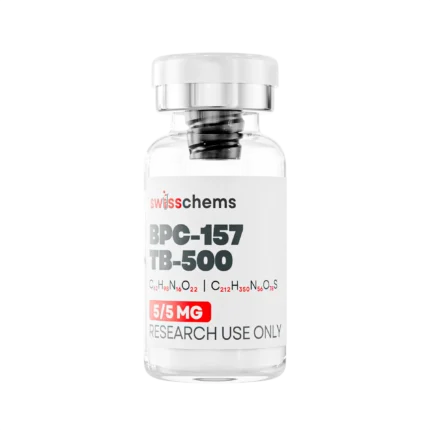
BPC-157 5mg + TB-500 5mg (Blend), 10mg
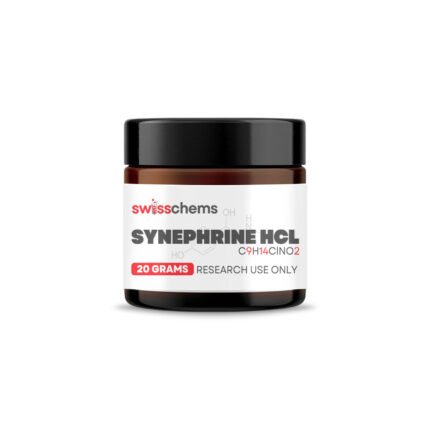
Synephrine HCl – Powder, 20 grams
Optimize your metabolic research protocols with Swiss Chems Synephrine HCl. This hydrophilic hydrochloride salt formulation is engineered for superior solubility and stability, providing a reliable model for investigating adrenergic receptor modulation and thermogenic pathways. Buy Synephrine HCl online from the official Swiss Chems store—HPLC-verified for 99% purity and laboratory-grade precision.


Bemethyl (100mg/capsule) 60 Capsules


7,8-Dihydroxyflavone (10mg/capsule), 60 Capsules


